

EVAS deploys in seconds, creating a clear, sealed viewing environment that restores access to essential instruments and forward visibility.
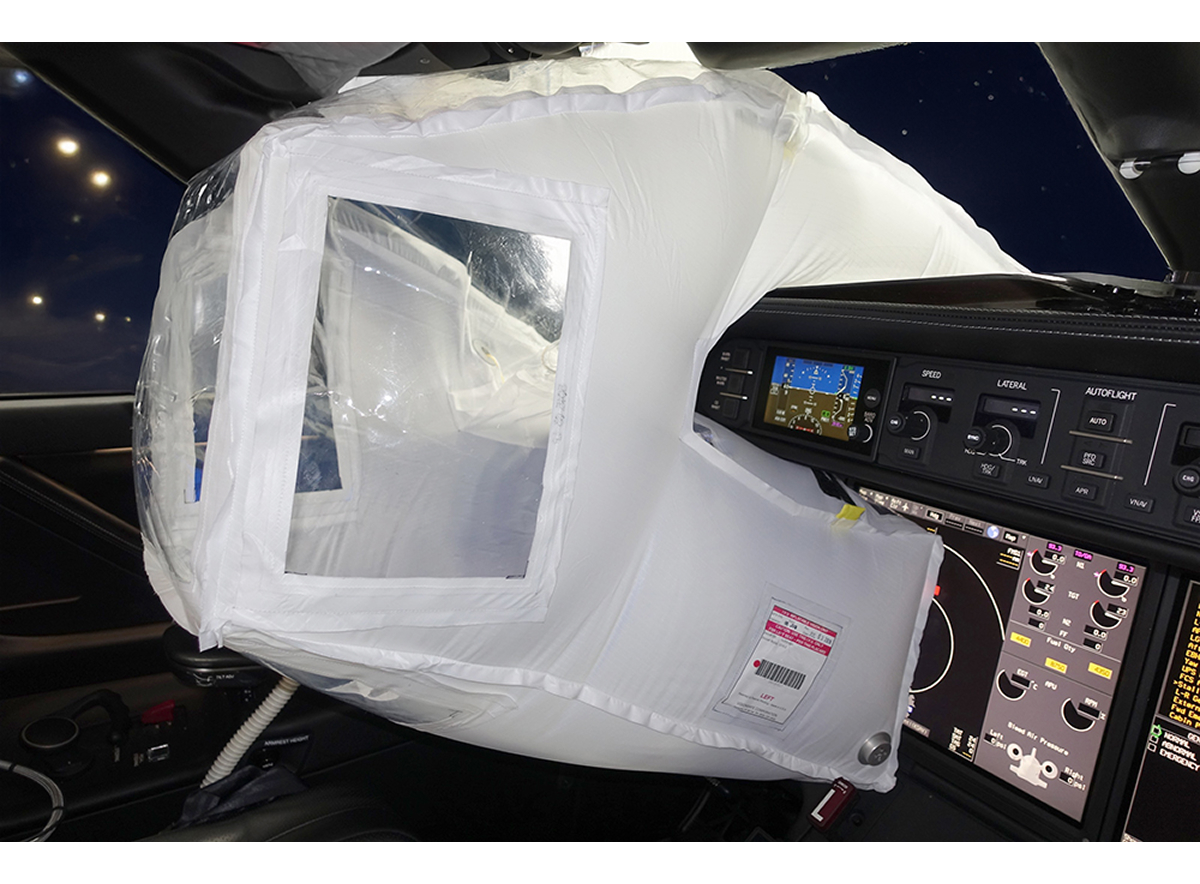
EVAS is stored in a compact case approximately the size of a Jeppesen navigation manual. When needed, the pilot removes the Inflatable Vision Unit (IVU) and activates the system by pulling a deployment tab.
The system inflates in approximately 30–60 seconds, positioning the viewing enclosure within the cockpit.

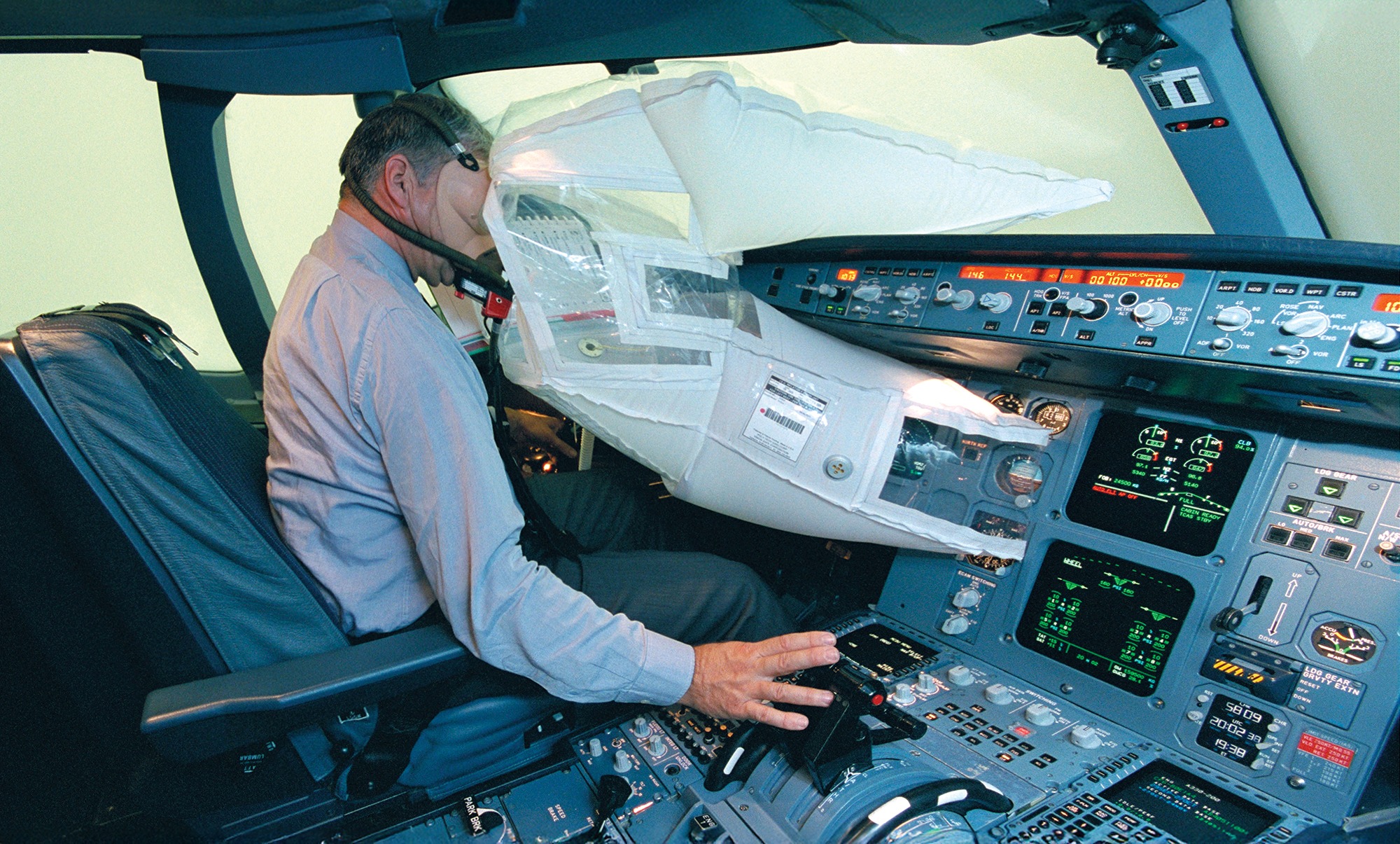
The Inflatable Vision Unit creates a sealed transparent viewing chamber positioned above and below the glareshield.
By filtering air within the enclosure, the system restores a clear viewing environment for the aircraft displays, instruments, and forward windshield.

EVAS operates completely independent of aircraft electrical systems. Each unit contains a self-contained alkaline battery power supply, pump, and filtration system capable of operating for at least the ETOPS rating of the aircraft, often two to three hours.
The filtration system removes particles down to .01 microns, maintaining visibility inside the viewing chamber even in dense smoke conditions.
By restoring visibility to critical flight instruments and forward windshields, EVAS supports crews in:
• Monitoring essential flight displays
• Maintaining aircraft control
• Communicating with air traffic control
• Executing emergency procedures as trained
• Aviate, navigate, and communicate with confidence
EVAS does not replace established procedures. It promotes their execution when cockpit smoke reduces visibility.

EVAS is FAA-certified and approved on 120+ aircraft types worldwide. The system has undergone rigorous smoke testing and certification evaluation to meet regulatory standards for installation and operational use. Detailed certification documentation is available upon request.







Connect with our team to discuss certification, installation, and operational integration for your aircraft or fleet.

